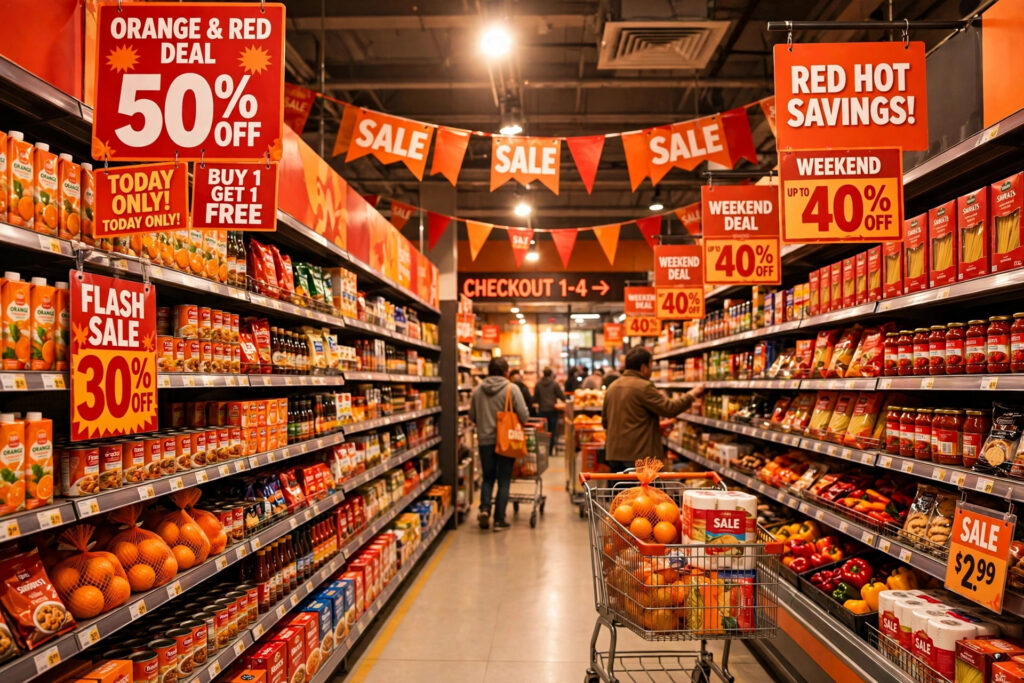
The bigger box isn’t always the better deal, and the shelf tag already does most of the math for you. Divide price by quantity to get the unit price, compare that single number across sizes, and you can spot the cheaper option in about ten seconds — no guesswork, no overspending on bulk that isn’t actually cheaper.
How to Read the Shelf Tag Without Squinting for Five Minutes
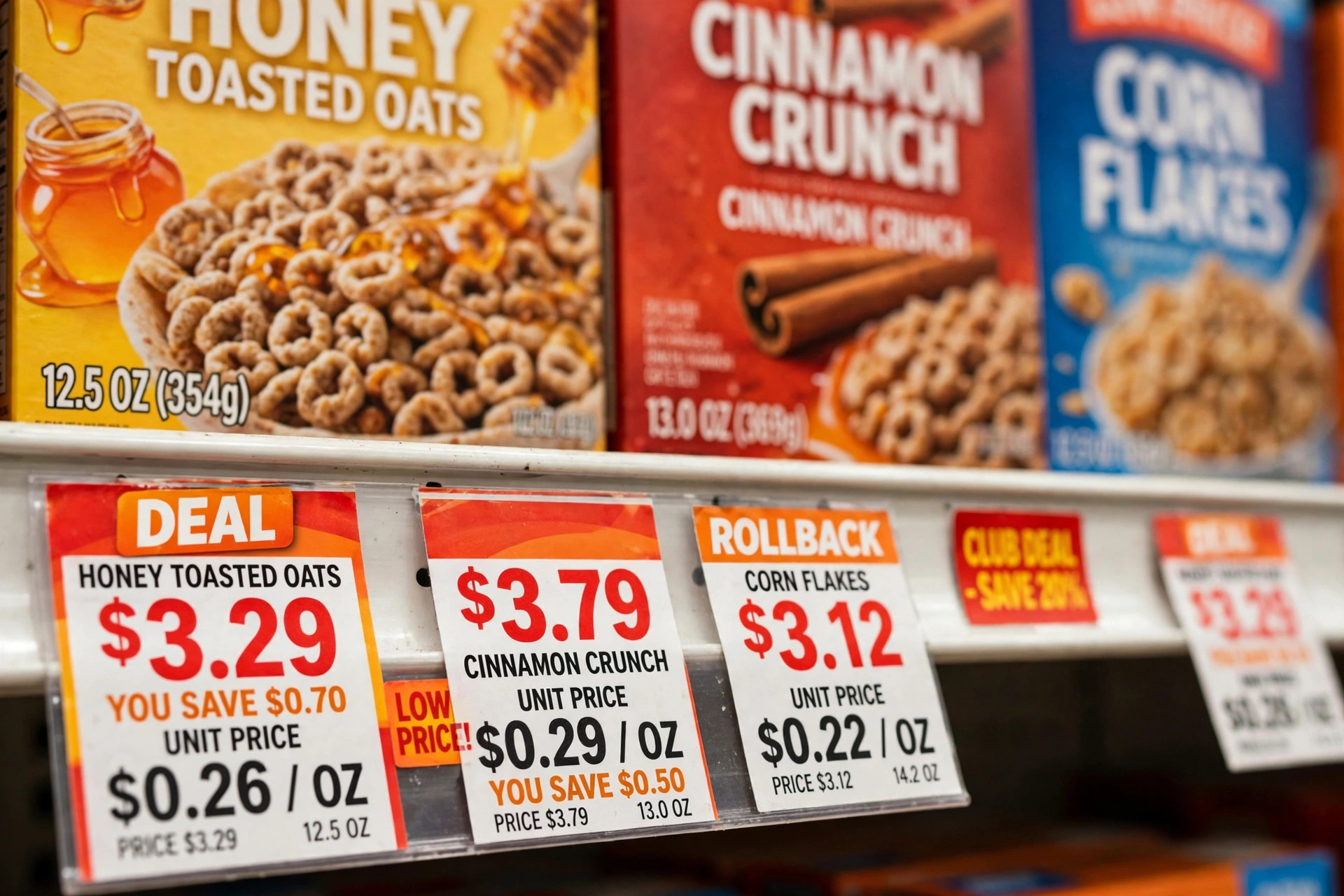
Most supermarket shelf tags have two prices. The big number is what you pay at the register. The smaller number, usually tucked in a corner of the tag, is the unit price.
That small number tells you the cost per ounce, per pound, per sheet, per load, or per 100 grams. It depends on the product.
Why does that matter? Because packages lie by size. A tall, skinny box can look generous and hold less than a short, wide one right next to it.
The unit price strips away the packaging tricks. Two different sizes, two different brands, one fair comparison.
Look for it in the same spot every time on that store’s tags. Once you know where it lives, you don’t have to hunt. A quick glance down, a quick glance across, done.
Some tags use different units for the same category, though. One brand might list price per ounce and another might list price per pound. That mismatch is annoying, and it’s exactly why your phone helps.
The 10-Second Phone Calculator Routine
Here’s a routine that takes about ten seconds once you’ve done it twice. No app download. No spreadsheet. Just the calculator already on your phone.
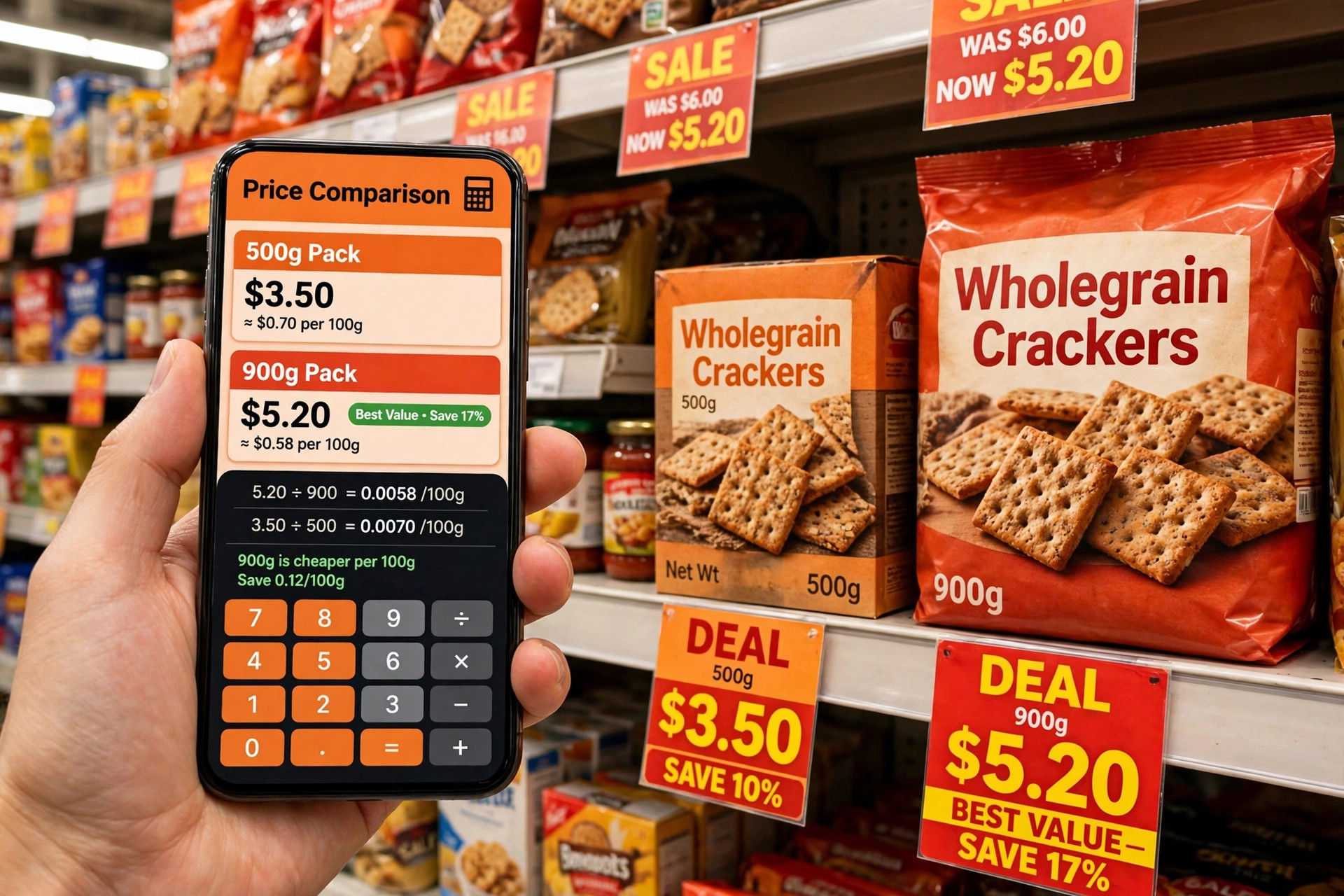
Step 1: Type the price. Step 2: Hit divide. Step 3: Type the quantity from the front of the package — ounces, sheets, loads, whatever the package counts. Step 4: Hit equals. That’s your unit price.
Say a 24-ounce box costs $4.80 — that’s an example price, not a store deal. You’d tap 4.80 ÷ 24 and get 0.20. So the example works out to $0.20 per ounce, or 20 cents an ounce.
Now try the smaller box next to it. Say a 12-ounce box costs $3.60 — again, that’s an example price. That’s 3.60 ÷ 12, which is 0.30. So $0.30 per ounce.
See the gap? The larger example is cheaper per ounce even though it costs more at the register. Ten seconds, and the choice is clear.
Short on time? Round in your head first. If the rounded numbers aren’t close, you don’t even need the exact math. If they’re close, then pull out the phone.
One habit helps here. Always divide in the same order — price first, quantity second. Swap them and you’ll get a nonsense number that looks real. Price ÷ quantity, every single time.
Per Ounce, Per Sheet, Per Load: Compare the Right Unit
Not every product should be judged the same way. The right unit matches how you actually use the thing.
Food and drinks: per ounce or per pound. Cereal, oats, rice, coffee, and juice all make sense by weight or volume. If one package lists total ounces and another lists pounds, convert first — there are 16 ounces in a pound — then divide.
Paper goods: per sheet or per roll, but sheets win. Rolls aren’t equal anymore. One brand’s roll can have far fewer sheets than another’s, so price per roll can mislead you. Check the total sheet count printed on the package and divide by that.
Say a pack lists 600 sheets total and costs $6.00 — that’s an example price. That’s 6.00 ÷ 600, which is 0.01. One cent per sheet. Now you’ve got a number you can hold up against any other pack, whatever the roll count says.
Laundry and dish products: per load or per wash. A big bottle that doses small can beat a cheap bottle that pours heavy. Look for the load count on the label, not just the fluid ounces.
Say a detergent lists 50 loads and costs $10.00 — that’s an example price. That’s 10.00 ÷ 50, which is 0.20. Twenty cents per load. If a smaller bottle costs less but covers half the loads, the per-load math will show it fast.
What about things sold by count, like trash bags or batteries? Per piece works fine there. Price ÷ count, same routine.
The rule is simple. Don’t compare a per-ounce number to a per-pound number, and don’t compare per roll to per sheet. Convert to the same unit first, or the comparison means nothing.
When Bulk Is Not Cheaper
Bulk has a good reputation. Sometimes it earns it. Sometimes it really doesn’t.
A larger package can carry a higher unit price than the regular size. It happens during promotions, when the small size is on sale and the big one isn’t. It also happens when a brand prices the family size as a convenience, not a discount.
Don’t assume. Check the tag.
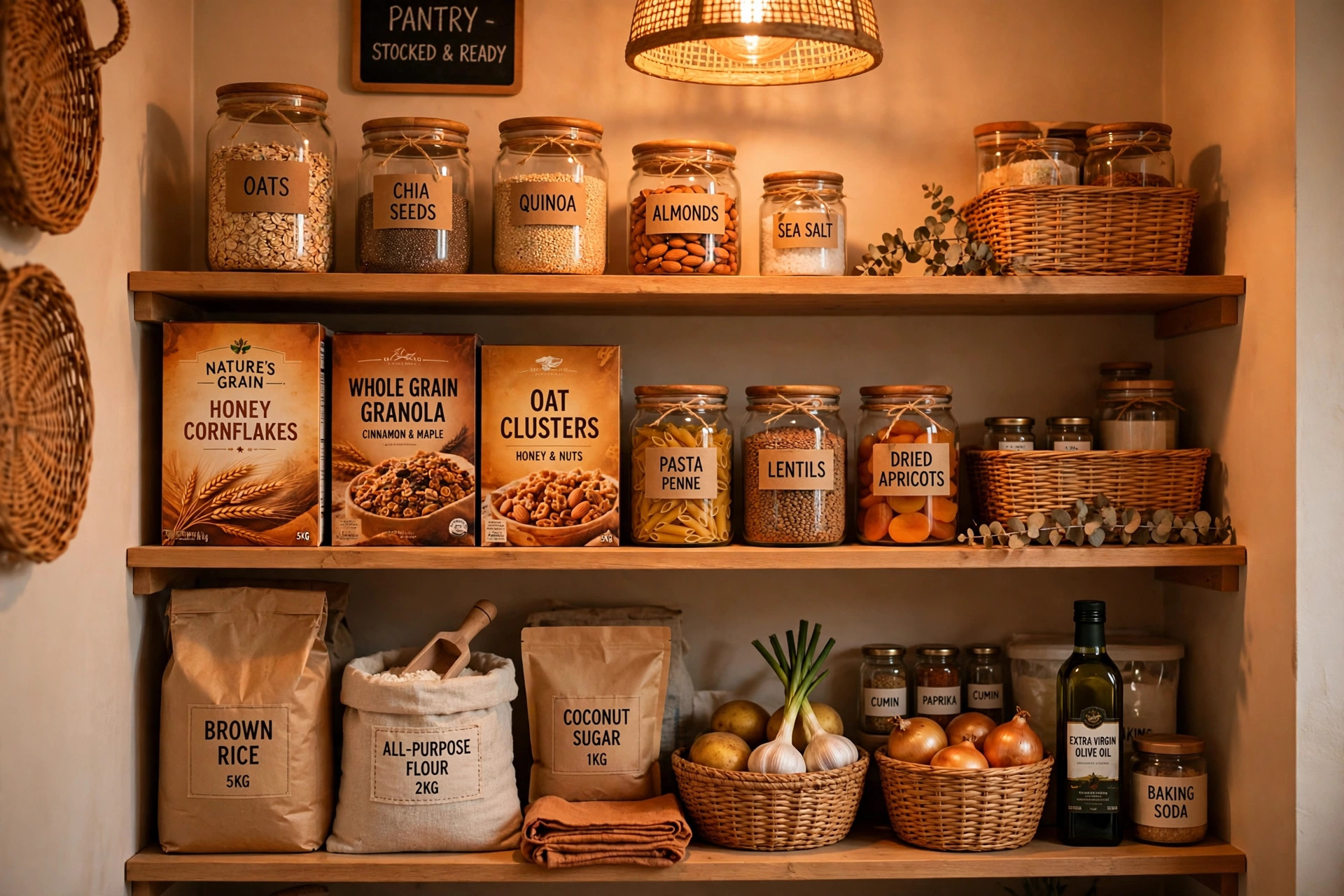
There’s a second trap, and it’s about your home, not the store. If food goes stale, wilts, or sits past its date, the cheap unit price stops being cheap. You paid for ounces you threw away.
Ask yourself two quick questions before you grab the giant size. Will this get used before it goes off? And is there actually space for it?
If the answer to either is no, the smaller package is the smarter buy — even at a higher unit price. A slightly pricier ounce you finish beats a bargain ounce you bin. Every time.
Storage counts for paper goods and cleaning supplies too. They don’t spoil the same way, but a year’s supply ties up cash and cupboard space. If a sale cycles back every few weeks, you don’t need to stock a warehouse at home.
The Shrinkflation Check: Same Price, Smaller Package
Sometimes the price stays put and the package quietly shrinks. The box looks the same on the shelf. The weight printed on the front does not.
That’s why the quantity number matters as much as the price number. If you remember what you paid per ounce last time, a smaller package at the same price shows up instantly as a higher unit price.
You don’t need a perfect memory. Just build the habit of glancing at the weight, not only the price. “Same price as last time” means nothing if there’s less inside.
A practical trick: keep one or two anchor products in mind — the cereal, coffee, or detergent you buy most. Know their usual size. When that size changes, you’ll notice, because it’s the one you reach for without thinking.
Changed size isn’t automatically a bad buy, either. Maybe it’s still the cheapest option per ounce on that shelf. The point is to decide with the real numbers in front of you, not with last month’s numbers stuck in your head.
A Quick Table to Practice On
These rows are examples only — the prices are made-up teaching numbers, not store prices or live deals. They’re here so you can check the math yourself.
| Example product | Example price | Quantity | Math | Unit price |
|---|---|---|---|---|
| Example A — Oats | $4.50 | 18 oz | 4.50 ÷ 18 | $0.25 per oz |
| Example B — Paper towels | $4.80 | 480 sheets | 4.80 ÷ 480 | $0.01 per sheet |
| Example C — Laundry detergent | $10.00 | 50 loads | 10.00 ÷ 50 | $0.20 per load |
Run each row on your phone if you want. You should land on exactly the unit price shown. If you don’t, check the order — price first, quantity second.
Notice how each row uses a different unit. That’s deliberate. Oats by the ounce, towels by the sheet, detergent by the load. The unit follows the use, not the package shape.
Small Habits That Keep the Math Honest
You don’t need to check every single item in the cart. That way lies madness, and a very long shop.
Start with the repeat buys. The five or six products you purchase again and again are where a few cents per ounce add up across a month. Check those first. Get fast at those, and the rest gets easier on its own.
Watch the sale tags with the same eyes. A sale price lowers the unit price too, so compare the sale item’s unit price against the regular unit price of the other sizes. Sometimes the sale size wins big. Sometimes the regular family size still wins. The tag won’t tell you which unless you compare across the shelf, not just down at one product.
And if two options land within a cent or two per unit? Stop calculating. Pick the one you’ll use up happiest, the brand you prefer, or the size that fits your shelf. At that gap, convenience is worth more than another minute of math.
That’s the whole skill, really. One division, one fair unit, ten seconds. Do it often enough and you won’t think of it as math at all. It’ll just be how you shop.
Frequently Asked Questions
Where is the unit price on a shelf tag?
It’s usually the smaller number in a corner of the shelf tag, separate from the large register price. It’ll say something like per ounce, per pound, or per sheet next to it. If a tag doesn’t show one, divide the price by the quantity on the package yourself — that gives you the same figure.
Is the biggest package always the cheapest per unit?
No. A larger package can have a higher unit price than a smaller one, especially when the smaller size is on sale and the larger one isn’t. Always compare the unit prices on the tags, or run price ÷ quantity for both sizes, before you assume bulk wins.
Should paper towels be compared per roll or per sheet?
Per sheet is fairer. Rolls vary a lot in sheet count, so a low price per roll can hide a small roll. Find the total sheet count on the package, divide the price by that count, and compare cost per sheet across brands.
How can you spot a package that got smaller at the same price?
Check the weight or count printed on the front, not just the price. If the price hasn’t changed but the ounces, sheets, or loads have dropped, the unit price has gone up. Knowing the usual size of products you buy often makes the change much easier to catch.
What if two products use different units on their tags?
Convert them to the same unit before you compare. For weight, there are 16 ounces in a pound, so divide a per-pound price by 16 to get the per-ounce figure — or just divide each product’s price by its quantity in ounces yourself. Same unit, fair comparison.
This article was created with AI assistance and reviewed by our editorial team before publishing.