
Coupon stacking means applying multiple discounts to the same purchase at once — a store coupon plus a manufacturer coupon on an already-on-sale price, then cashback from an app like Rakuten or Ibotta on the final total. Because each discount comes from a different source, most retailers allow them to combine.
What Coupon Stacking Actually Means
Most shoppers use one discount per trip. They find a coupon, hand it over, and call it a win. Coupon stacking flips that mindset: instead of hunting for the single biggest discount, you layer every discount you’re entitled to on top of each other.
The trick is understanding that discounts have different issuers. A manufacturer coupon comes from the product brand. A store coupon comes from the retailer. A cashback reward comes from an app. Because each one is paid for by a different party, the store often has no reason to refuse combining them. As The Krazy Coupon Lady puts it in their stacking guide, the standard practice is using one manufacturer coupon and one store coupon on the same item.
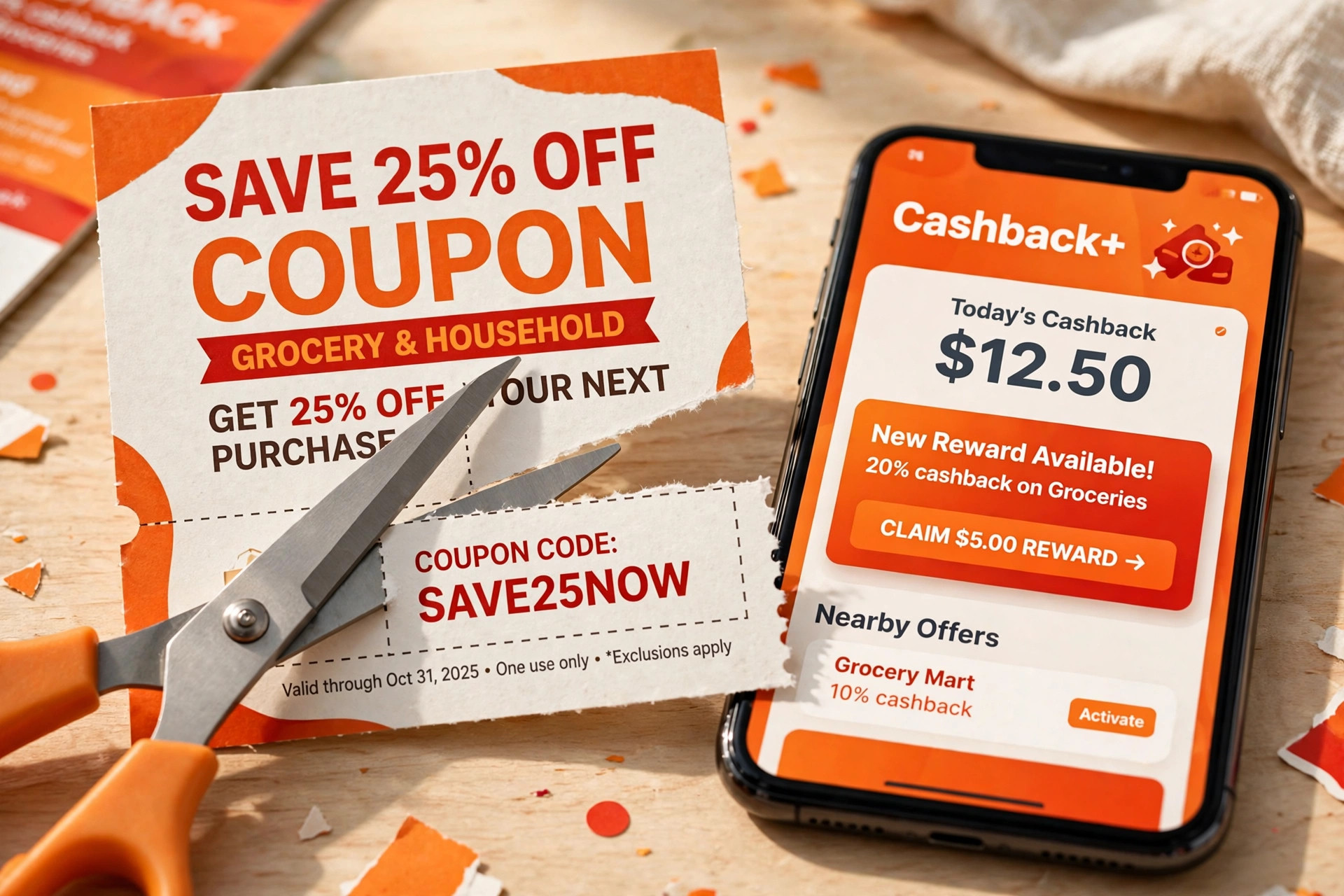
This works both in store and online, though the mechanics differ. In a physical store, you’re usually stacking paper and digital manufacturer coupons with the store’s own coupons. Online, stacking usually means applying a promo code on top of a sale price, then routing the purchase through a cashback portal like Rakuten. The layers change; the logic doesn’t.
The Four Layers of a Perfect Stack
A full stack has four layers, and they apply in a specific sequence. Miss a layer and you’re leaving money on the table. Add a layer the store doesn’t allow and your checkout breaks.
Layer 1: The sale price
This is the base. A product already marked down — a weekly ad deal, a clearance tag, a site-wide sale — counts as your first discount even though you did nothing to earn it. Coupon stacking starts here because every coupon you add later reduces an already-lowered price.
The common mistake is treating the sale price as “good enough” and stopping. The sale price isn’t the finish line. It’s the foundation.
Layer 2: The store coupon
Store coupons come from the retailer itself — Target Circle deals, CVS ExtraCare coupons, or a promo code on a website’s checkout page. The store absorbs this cost, hoping you’ll buy other items at full price along the way.
These are the most flexible layer in the stack. Store coupons are designed to combine with sale prices, and most retailers explicitly allow one store coupon plus one manufacturer coupon on the same item, according to stacking guides from Rakuten and DontPayFull.
Layer 3: The manufacturer coupon
Manufacturer coupons come from the product brand and are redeemable at any retailer that carries the product. Clip them from newspaper inserts, print them from coupon sites, or load them digitally in store apps. The brand reimburses the store for accepting them, which is why stores generally accept one per item — the brand covers that discount.
The one hard rule across almost every retailer’s policy: you can’t combine two manufacturer coupons on the same item. As rebate guides commonly explain, stacking two coupons of the same type on one item is the move most stores will reject. One manufacturer coupon plus one store coupon works because they come from different issuers.
Layer 4: Cashback apps and loyalty rewards
This is the layer most shoppers never touch. Apps like Rakuten, Ibotta, and Fetch Rewards pay you back for purchases you’ve already made — a percentage or a flat amount, credited after you scan a receipt or shop through their portal. Because the store never sees this layer, it stacks on top of everything else.
ConsumerAffairs notes that Rakuten partners with over 3,500 stores and typically pays between 1% and 10% back on online purchases, with higher rates during promotional periods. Ibotta works differently: you activate offers for specific products before shopping, then upload a receipt, and can withdraw once your balance reaches $20, according to comparisons of the two apps. Fetch Rewards is the simplest — snap a photo of any receipt and earn points redeemable for gift cards.
The Order to Apply Them
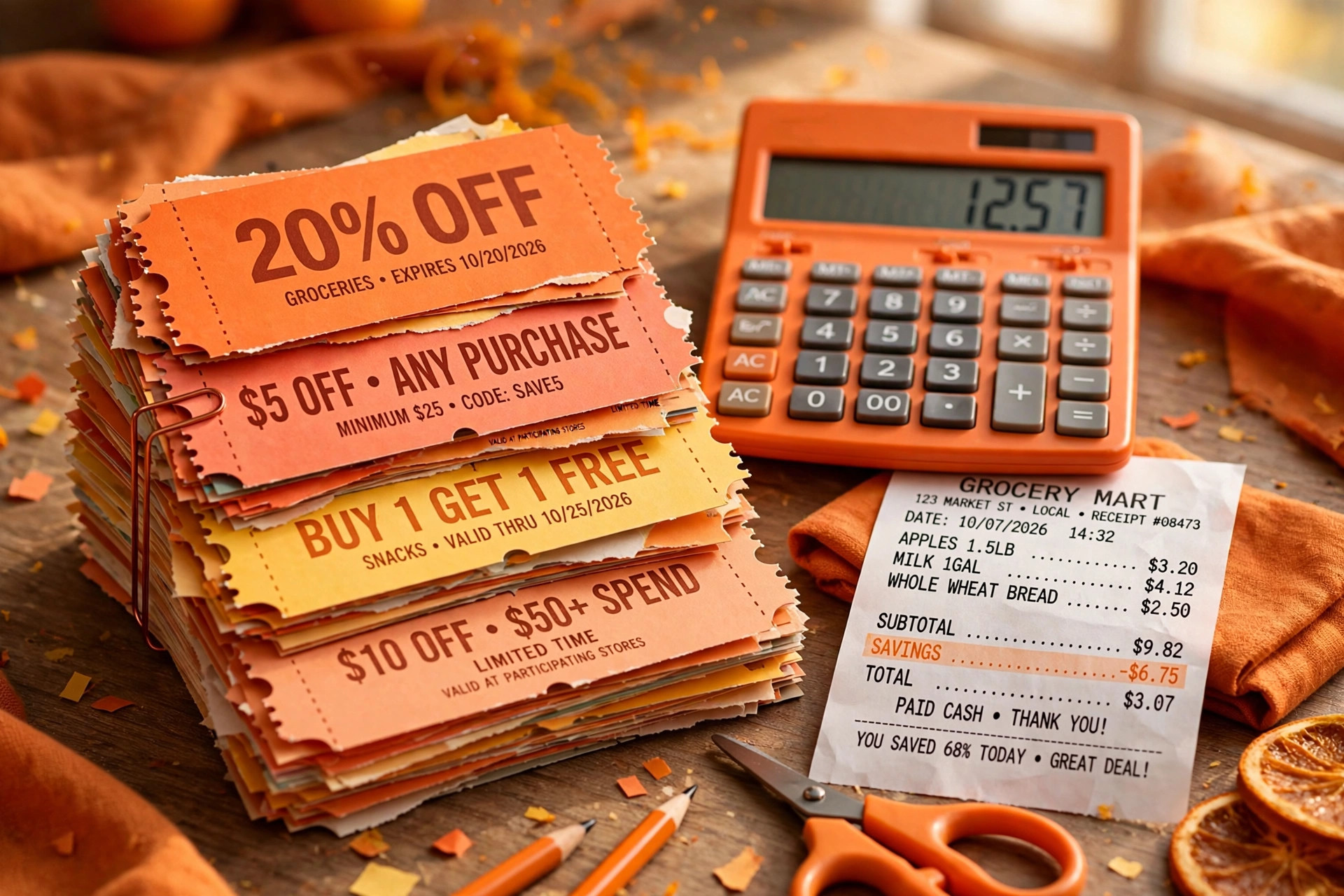
Stacking isn’t just about having the right coupons. The order matters, because each layer usually calculates on the price left by the layer before it.
- Start with the sale. Buy the item at its lowest advertised price — weekly ad, clearance, or site-wide sale.
- Apply the store coupon or promo code. In store, present or scan it at checkout. Online, enter the code in the promo field. Most retailers allow one promo code per order, though Rakuten’s coupon glossary notes that some stores, like Kohl’s and JCPenney, allow more than one.
- Add the manufacturer coupon. One per item. Paper or digital, whichever you have — but read the fine print first, because many retailer policies don’t let you combine a manufacturer’s digital coupon with the same manufacturer’s paper coupon on one item.
- Submit the receipt to cashback apps. After paying, scan the receipt into Ibotta or Fetch Rewards. For online purchases, start the session through Rakuten’s portal before you check out — if you visit another site after clicking through, you can lose the last-click tracking that credits your cashback, ConsumerAffairs warns.
- Let loyalty rewards calculate last. Store loyalty points and percentage-off card benefits usually apply on the already-discounted total.
Where to Find Each Layer
You can’t stack what you don’t have. Each layer lives in a different place, and the best stackers collect from all of them before shopping day.
Store coupons live in retailer apps — Target, CVS, Walgreens, and Kroger all run digital coupon programs inside their apps, according to The Krazy Coupon Lady’s stacking guide. Sign up for store email newsletters too; welcome offers and birthday coupons show up there regularly.
Manufacturer coupons live on brand websites, in Sunday newspaper inserts (P&G and Unilever run the big ones), and on printable coupon databases. The shift to digital has been steep — a DontPayFull stacking guide reports that 89% of coupon users prefer digital over paper — so check your store’s app for loadable manufacturer offers before assuming paper is the only option.
Promo codes live on deal sites, retailer email lists, and browser extensions. Rakuten’s own browser extension flags available codes at checkout, which doubles as a reminder that cashback is available on the same order.
Cashback apps live on your phone. Pick the one that matches how you shop: Rakuten for online purchases, Ibotta for planned grocery trips with specific brand offers, Fetch Rewards for everything else with zero planning.
A Worked Example (Illustration, Not a Real Deal)
Here’s how the layers combine on a hypothetical purchase. These numbers are made-up for illustration — they show the mechanics, not an actual offer.
Say a bottle of laundry detergent is on sale for $12.99, down from $16.99. You have a $2 store coupon from the retailer’s app and a $1.50 manufacturer coupon from the brand’s website. The receipt also qualifies for $1 back on Ibotta.
Stacked: $12.99 − $2.00 (store coupon) − $1.50 (manufacturer coupon) = $9.49 at the register. Then $1.00 back from Ibotta brings the effective price to $8.49 — roughly half the original shelf price, from four layers working together.
That ratio is typical of a well-built stack, not a fluke. No single layer did the heavy lifting; the savings came from combining all of them.
Common Stacking Mistakes
Stacking two manufacturer coupons on one item. This is the fastest way to get your coupons rejected. One manufacturer coupon per item is the standard rule — pair it with a store coupon instead.
Ignoring the “cannot be combined” fine print. Some coupons explicitly state they can’t be combined with any other offer. Read before you stack, because a rejected coupon at a busy register is worse than no coupon at all.
Using expired codes. Digital coupons expire too, and expired codes are the most common reason online stacks fail. Check dates before checkout, not during.
Breaking cashback tracking. For portal-based cashback like Rakuten, click through the portal last and complete the purchase in the same session. Browsing away before paying can void the cashback entirely.
Forgetting exclusions. Sale prices, store coupons, and promo codes all carry exclusion lists — certain brands, categories, or items won’t qualify. A coupon for “20% off” that excludes the one brand you want is worth nothing to you.
Buying things you don’t need. A stack that saves 60% on something you would never buy isn’t savings. The best coupon stackers buy what they’d buy anyway and stack to pay less for it.
FAQ
Can I stack a store coupon and a manufacturer coupon on the same item?
Yes, this is the classic stack. According to stacking guides from Rakuten and The Krazy Coupon Lady, most retailers allow one store coupon plus one manufacturer coupon on the same item because each is funded by a different party — the retailer and the brand respectively.
How many promo codes can I use on one online order?
Usually just one. Most online stores limit checkout to a single promo code per order, though Rakuten’s coupon glossary notes exceptions like Kohl’s and JCPenney that allow multiple codes. Check the retailer’s coupon policy before assuming.
Do cashback apps really work on top of coupons?
Yes. Cashback apps like Rakuten, Ibotta, and Fetch Rewards operate independently of the store, so they pay out on the final price no matter which coupons you already used. The store has no visibility into your cashback layer.
Can I combine a paper coupon with a digital coupon?
Sometimes. Many stores let you stack one paper coupon with one digital coupon on a single item, but policies vary — and some stores explicitly forbid combining a manufacturer’s paper coupon with the same manufacturer’s digital coupon. Confirm your store’s written policy first.
What’s the biggest stacking mistake beginners make?
Trying to stack two coupons of the same type on one item. Two manufacturer coupons on a single product is the combination most retailers will reject. Build your stack from different coupon types instead — sale, store coupon, manufacturer coupon, then cashback.
One stacking habit worth building: run the combined percentages before you check out. A percentage calculator shows what 20% off plus an extra 10% code really adds up to — it is not 30%, and knowing the real number stops you overspending just to “save”.
This article was created with AI assistance and reviewed by our editorial team before publishing.